

Psych Saturday: The Measuring Stick
Justin and I were getting ready to teach a clinic, and over coffee this week we found ourselves talking about how to begin. Not the logistics. The first conversation. What do we say to a group of riders… that sets everything else in motion? For us, it always starts with horsemanship principles.
We kept coming back to the same thing. Lately we have both been struck by how much confusion there is in the horse world. Never in history have riders had access to so many approaches, trainers, systems, videos, books, and clinics. One person tells you to drive the horse forward. The next tells you to wait. One method swears by pressure and release, another by positive reinforcement, another by classical tradition, another by something brand new with a catchy name. Each comes with confident voices and beautiful videos.
I have a great deal of compassion for riders trying to sort through it all. It is genuinely hard to figure out what is good and right and true. I watch people bounce from one approach to the next, gathering techniques like souvenirs, and growing more uncertain with each one. Their horses often feel the same way.
When people ask us how to make sense of it, our answer is always twofold.
The first part is principles.
One way to think about principles is as the set of ideals or values that do not change, no matter what we are doing with a horse. Whether we are grooming, leading, starting a young horse, or riding a test, they stay the same. That doesn’t mean principles can’t evolve. Mine certainly have over forty years. But they do not shift from day to day or from situation to situation. They are the ground we stand on.
Harrington Emerson, an efficiency engineer writing more than a century ago, put it beautifully. “As to methods, there may be a million and then some, but principles are few. The man who grasps principles can successfully select his own methods. The man who tries methods, ignoring principles, is sure to have trouble.”
I love that, because it names exactly what I see. Principles give us a measuring stick. They are a way of evaluating what we are doing and what we are learning. And, maybe most importantly in today’s horse world, a way of evaluating what someone else is teaching or proposing.
Here are the principles Justin and I hold at Riding Far.
Absolute respect of the horse and rider. Regulation first. Intent precedes position, and position precedes action. There is never a conflict on the level of needs. The aids are a taught language. The aids are to request or restore, never to maintain. The aids must not contradict. Take the time it takes.
Justin’s personal list includes another line, coming from our work with Pippa Callanan, worth sitting with: the horse owes us nothing.
Now imagine bringing those to the next clinic you audit or the next video that crosses your feed. Is the horse regulated before anything is asked of him? Are the aids being taught as a language, or simply applied until the horse gives up? Is the rider holding constant pressure to maintain a frame, or asking and then getting out of the way? Is anyone in a hurry? Suddenly the noise gets quieter. You don’t need to know every method to recognize whether one honors what matters to you.
Our principles sit alongside a short list of values that guide how we work with people as well as horses. Be impeccable. Elevate others. Build safe environments. Improve every day. The first of those asks the most of us. To be impeccable means being honest and truthful in what we say, and acting in a way that is consistent with those words.
But principles have a weakness. They do us no good if they just swirl around in our heads. Plenty of people can recite beautiful values and then ride in ways that contradict every one of them. Principles need to touch the ground. Being impeccable means closing the gap between what we believe and what our hands are actually doing.
That is the second part of our answer.
At Riding Far, Justin and I have started calling it the Riding Far Way. Our mission speaks of offering a principled process that honors both the horse and the rider, and this is what that process looks like in practice. It is a simple, logical progression that embodies our principles and gives us a framework for understanding where we are in our relationship with our horses.
Connection: creating safety and stability for horse and rider.
Communication: building clarity through mutual acceptance, understanding, and a shared language.
Competence: developing skill, feel, and understanding.
Performance: expressing that development with confidence and consistency.
What I like most about it is that it represents our values more strongly than it represents methods, strategies, or techniques. It does not tell you which bit to use or how many times to circle. It tells you what has to be true before the next thing can be true. Development unfolds through regulation, trust, communication, and systematic progression rather than force or urgency. A horse who does not feel safe cannot really learn our language. A horse and rider who do not share a language cannot build real competence together. And performance that is not built on competence is a house of cards, beautiful until the first strong wind.
When something goes wrong, the Riding Far Way also gives us a place to look. Most of the time, a performance problem is not a performance problem at all. It is a competence problem, or a communication problem, or, more often than you might think, a connection problem showing up in fancy clothes. Going back a step is not failure. It is wisdom.
So that is what we will bring to the circle on the first morning of the clinic. Our principles and values, packaged in our own way.
We will invite our participants to start there too. To look inside and get curious about their own principles. What do they believe, really believe, about horses and about how we ought to be with them? And then the harder question: how are those beliefs reflected in their actions, in their hands, in their seat, and in the choices they make when they are tired, frustrated, or under pressure?
From there, we can explore each rider’s journey with their horse through the Riding Far Way. Where are they now? What foundation is solid, and what might need a little more time?
I suspect that’s where the confusion starts to clear. Not by finding the one right method, but by knowing what you stand for and letting that guide which methods you choose. Our hope is an equestrian community where passionate riders develop sustainable performance built on partnership, and where horses and riders both thrive. That community gets built one principled rider at a time.
There will always be a million methods. Know your principles, and you will know which ones are yours.
~ Paul
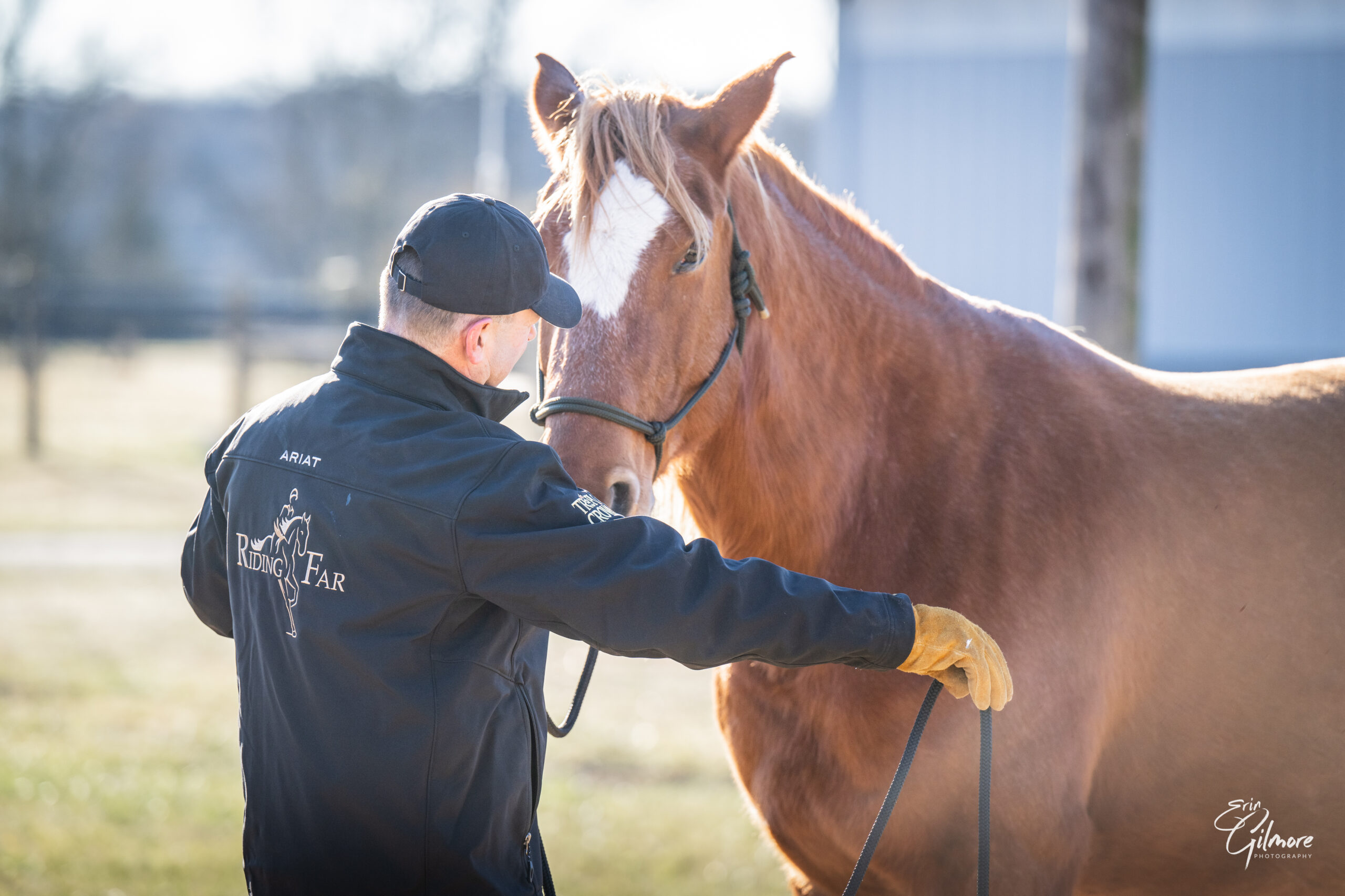
PC – Erin Gilmore Photography


LEAVE A COMMENT
Comments