
riding far blog
Our goal is to raise riders' awareness of the importance of mental and emotional skills in equestrian sport. We help equestrians achieve their personal riding goals.
WE SUPPORT, CHALLENGE AND INSPIRE EQUESTRIANS
We hope you will enjoy our insights in the forms of Casual Conversations, videos and articles aimed at helping the equestrian transform their relationships with their horses. We are passionate about sharing our knowledge, tips, tricks, and experiences.
October 17, 2026
Yesterday I was talking with a young rider I have known for a long time. She was telling me about her college application process and offered to share her application essay. Within moments I received an email, but I didn’t have time to read it thoughtfully until this morning.
I settled myself on the front porch with a blanket and a cup of coffee and opened the document. I found myself reading it twice, then sat for a while with the dog at my feet, not doing much of anything.
I have watched this rider grow up in the saddle. I have sat with the frustration, the tears after rounds that looked fine from the rail, the quiet intensity that most people mistook for focus. What I had not seen, until this morning, was the whole arc laid out in their own words, with an honesty and grace that I am still thinking about.
The essay opens with a confession. Everyone in the horse world has heard that the horse comes first. At ten years old, this rider thought it was the dumbest thing they had ever heard.
I laughed out loud at that line, because I believe it. Their first horse was a winner. They went to shows and came home with ribbons, and the ribbons were the point. They describe sitting with friends who were gushing over their horses after bad rides and thinking those friends were soft. Weak, even. How could anyone be happy after a poor score?
Then comes the sentence that stopped me. They wrote that their scores were tied to their self-worth, and that even a good score brought relief, not joy.
I have spent decades listening for that distinction in my office. Relief and joy can look alike from the outside, but they come from very different places. Joy is what we feel when something good arrives. Relief is what we feel when something bad was avoided. A rider who only ever feels relief is not chasing success. They are running from a verdict. Every round becomes a trial, and the best possible outcome is a temporary acquittal.
That is what performance identity does to a person. When who I am collapses into how I placed, there is no such thing as a safe ride. The nervous system stays braced. And a braced rider is riding a horse who can feel every bit of that bracing.
This young rider describes their first horse, honestly and without self-pity, as a tool for success. When their ambition outgrew what that horse could do, they moved on. I do not read that as a confession of cruelty. I read it as a clear portrait of what it looks like when a child has learned that love is something you earn by winning. You cannot offer a horse a kind of acceptance you have never been offered yourself.
Then a new horse arrived. Funny, full of personality, and a beast on course. On the very first ride, this rider forgot about the scores. Riding stopped feeling like clocking in for a shift and started feeling like fun.
What happened next is the part every sport psychologist should underline. They did not trust it. They beat themselves up, worried that they were going soft, losing their edge, trading ambition for a good time.
I hear this fear from serious athletes all the time. The inner critic has been running the show for so long that it feels like the engine. If I stop being hard on myself, who will make me work? If I enjoy this, will I stop caring? The critic convinces us that our cruelty is our competitiveness. It almost never is.
This rider wrote that they had found the horse version of themselves. Full of ambition, and, they would discover, starving for connection and a partner.
That line is the hinge of the whole story. The ambition never left. What arrived alongside it was love. And love, it turns out, is not the enemy of performance. It is the ground performance grows in.
Then came a bad ride. They were upset, of course. But when they looked at their horse, instead of dread, they felt gratitude. Gratitude that he had tried as hard as he could. And then the sentence I keep returning to:
“On my first horse, our best was never enough, because enough didn’t exist.”
Enough didn’t exist. I have read a great deal of psychology in my life, and I am not sure I have seen the cost of contingent self-worth described more precisely. When worth must be earned, the target always moves. There is no finish line, only the next class, the next height, the next verdict.
What this rider found was not a lowered bar. They went on to win at the highest level of their age group. What they found was a floor. A place to stand that did not depend on the result. Their relationship with their horse became a source of safety, and from that safety came both joy and better riding. They noticed it themselves. The more they patted him, hugged him, and gave him their love, the better he went.
None of this surprises me as a horseman. A horse who feels safe with his rider has more of himself available to give. A rider who feels safe in her own worth has more of herself available to notice, adjust, and ask clearly. Connection before performance is not a sentimental slogan. It is how two nervous systems find each other.
The final paragraph of the essay notes something easy to miss. Winning used to be lonely. Now there are people, and a horse, to celebrate with. That is the quiet gift underneath all of it. Performance identity isolates us, because everyone becomes a competitor or a judge. Connection brings us back into the herd.
I did not teach this young person what they wrote. They lived it, with a horse who showed them the way, and they found the words for it on their own. My part, over the years, was mostly to keep the door open and to keep saying, in one form or another, that they were more than their scores. It is a strange and humbling thing to watch someone finally hear it, not from you, but from their horse.
The ribbons still matter to them. They always will. But they mean something different now. They used to say what this rider was worth. Now they say what the two of them built together.
The horse comes first. I suspect a ten-year-old somewhere is still rolling their eyes at that. I hope they find their way to enough.
Sometimes the best thing we can do for our ambition is to stop letting it decide whether we are loved.
~ Paul
Read More
I think there is a line in How the Grinch Stole Christmas! that goes something like this: “He puzzled and puzzled till his puzzler was sore.” That is how I feel this morning. Every once in a while, my brain calls a meeting and invites all the challenges I am aware of in some portion of my life. These last couple of weeks, the focus has been the horse world.
I am not going to trouble you with the whole list. The challenges are easy enough to find. Horse welfare, especially in training and competition. Rider wellness and education. Trainer education and development. Ethics in governing bodies. Sustainable and healthy business models. Capturing the interest and imagination of the next generation of horsemen.
There are voices out there speaking to all of these issues, and many more, in far more elegant and interesting ways than I could. My most recent read (ten minutes ago) is an article by Jamie Sindell, one of my favorite writers on the struggles of raising children in the modern world of horses. More broadly, as I read, watch, learn, and engage in conversations, I don’t always find myself agreeing with either the messages or the provocative tone that some “influencers” adopt. I do, however, respect that they are giving voice.
When I was young, I avoided these meetings in my mind. I was too invested in knowing, in being competent, in being the expert, to allow myself to be humbled by the enormity of these seemingly intractable problems. As I matured, I avoided them to escape the frustration, sadness, and overwhelm. Now, as an old(er) man, I am less worried about what the world thinks of me and far more able to hold the depth and breadth of the feelings that arise when I am faced with the complexity of life’s serious challenges. I have also come to learn a kind of patience that opens the door to engagement.
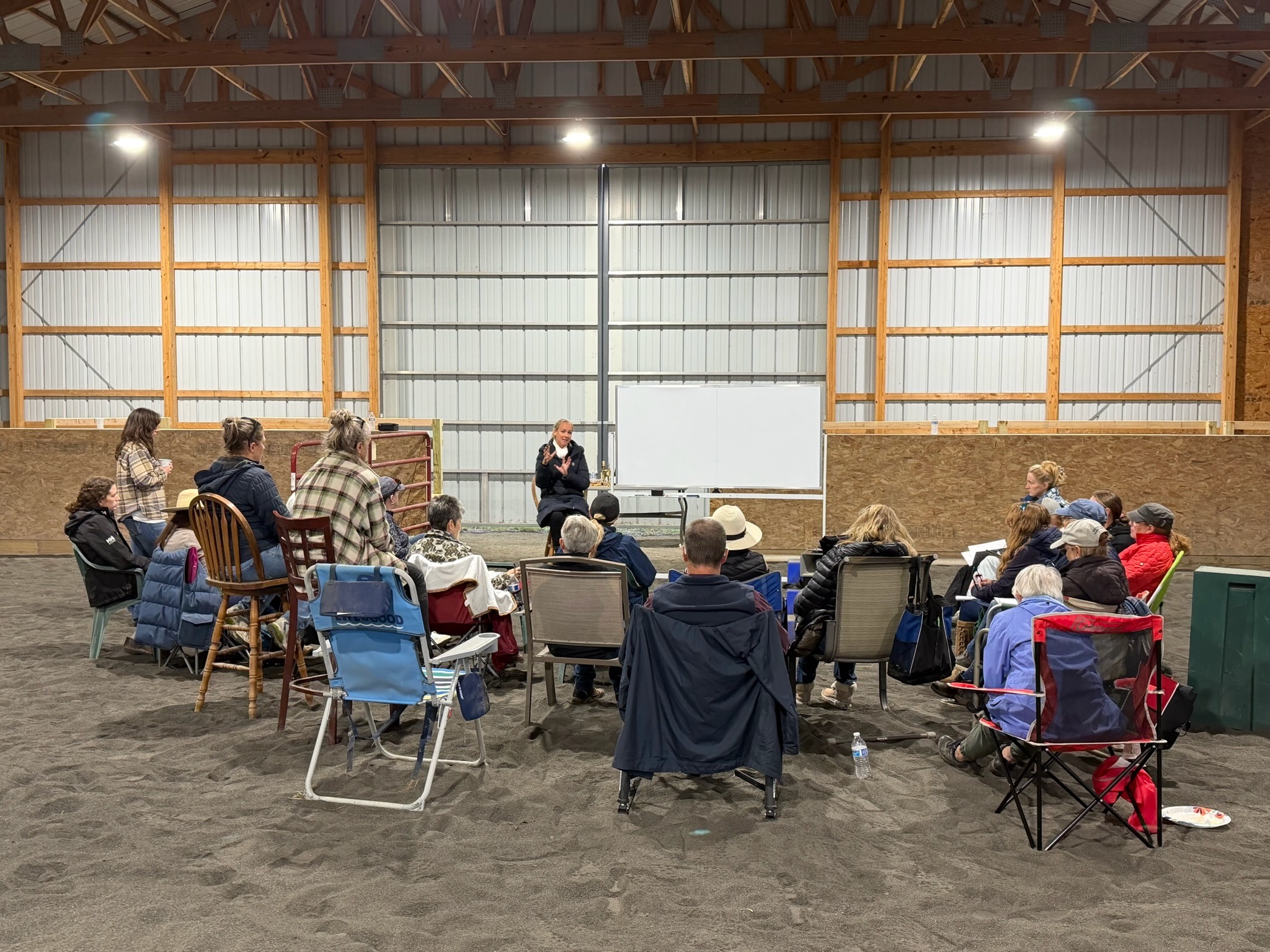
My good friend Bella reminded me the other day how often Justin and I talk about creating space and time for people to come together. Come together to share ideas, perspectives, challenges, hopes, and dreams. We talk about the need for communities of support because life is difficult, life with horses especially, and we cannot tackle any of its challenges alone. We were delighted to have a group of passionate young trainers attend the recent Pippa Callanan clinic. We were overjoyed to hear of the energy and support they felt just sharing that time and space together.
While I continue to puzzle and puzzle, seeking solutions or perhaps a pathway toward them, I have come to a deep realization. I can’t solve all of these challenges alone, and I am glad for it. Glad, not because I am faced with my inherent limitations, but because accepting them drives me to connect and engage with others. The meeting, it turns out, was never meant to be held in my head alone.
At the end of the day, this may be the most important thing: building communities that care, and in this way building a culture in our equestrian world that becomes the foundation from which our creativity flows.
~ Paul
October 10, 2026
Read more
October 3, 2026
Yes, it is that time again. Reflections after another amazing clinic with Pippa Callanan. Learning with her is like making a really good soup. It takes time, patience, quality ingredients, and the artistry and experience to add just enough of each.
One of the exciting parts for me is that my lovely mare, Nubble, and I were both sound enough to dance together. When you don’t take something for granted, you savor it in a way that brings a vibrance to the experience, and you start to notice the most interesting and subtle things.
Several moments from the clinic stand out as powerfully important, but one has flowed into every one of my rides this week. It seems small as I write about it, yet its impact has been profound.
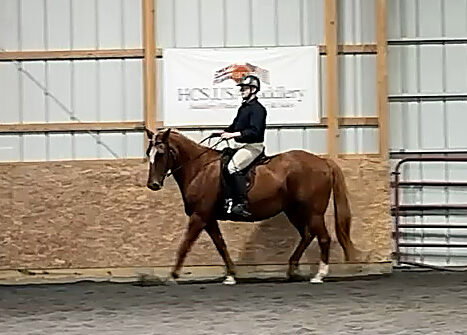
During my ride on Nubble, Pippa had us demonstrate a working walk, collected walk, counted walk, and piaffe in sequence, carefully transitioning between them. I had performed each of these hundreds of times, but never in sequence. Never where I had to create and feel the subtle differences as I moved from one to the next: the changes in Nubble’s cadence, her energy, and the bounce in her step.
This is just one part of Pippa’s brilliance. The exercise marshaled my attention in a way that let me both appreciate the experience and remember it. On top of that, I connected to our capability, Nubble’s and mine. That sometimes ephemeral sense of “I can do this!”
More than the learning and awareness, I have been filled with the desire to recreate those moments, to craft that soup again and again. What exactly were the ingredients? Was it the quality of the contact and Nubble’s relaxed jaw? Was it my posture and balance? Was it the position and action of my leg? Which ones were essential? How much of each? How did their balance need to change in creating each variation?
The thought I keep coming back to is that identifying the exact formula is impossible. Once again I am reminded that the result I want does not come from a linear process. It emerges from a constellation of ingredients, carefully collected under the watchful guidance of a caring and skilled mentor and through hundreds of hours of thoughtful, diligent practice.
I had a session this week with one of my youngest riders. We were reviewing her progress, and I asked her to reflect on what she had accomplished so far. Then I asked how she had gotten there. How did she make her soup? She said the most insightful thing. She started with, “All the tools.” Then she added, “We talked and worked on it and then all the sudden, poof, I did it.”
I could not have described it better. You gather the ingredients. You start putting them together, tasting as you go. You make the soup again and again, playing with the balance of ingredients and conditions, and one day, poof, it’s soup.
What soup are you making?
~ Paul
Read More
My mind wanders at times. Probably a lot more now than when I was younger. I used to think of that as a problem. Yet the older I get, the more I appreciate the connections I make when my focus is soft and I am wandering through the day.
Sure, I make some cool connections when I am laser focused and analyzing a problem. But they never seem to be as playful and fun as the ones I make when I am engaged in reverie, that wonder-filled state somewhere between reflection and dreaming.
Yesterday I had one of those moments over my morning coffee. My wife, Pam, was chatting about getting ready for our first grandson, who is expected in January. I had the random thought, *Construction Ahead.* My mind flashed through all the times in my life, both personally and with my horses, that I had experienced life’s equivalent of a construction zone.
Construction always starts with a vision of something new and improved.
I still remember, almost 30 years ago, dreaming up ways I could wed my passion for horses with my professional education and skills. I remember the many starts and stops, the distractions and detours along the way. Often, progress slowed to a standstill until the road ahead was cleared. Many times I was rerouted down roads that seemed so far from the path I wished to travel.
But lately I’ve noticed my “construction project” is a lot like the work on I-81 or I-95. It literally never ends. Each new piece seems to throw up roadblocks in ways and places where I was sure the work was already complete.
Nubble and I know that stretch of road well.
We were soaring along a path toward my goals. She was growing in balance and strength, our training was advancing, we had qualified for regional finals, and then she came up lame. Most of you know this part of the story. The diagnosis put an end to our competition goals, and I switched my focus to my other horse, Lil’ Joe.
Lil’ Joe is a very different horse, with very different physical and training needs. Honestly, it felt like a huge step back, a reroute onto a road I hadn’t chosen and didn’t want. But as I worked with him over the last several months, I realized that riding him demanded parts of my riding that my time with Nubble had never asked me to develop. He was refining things in me I didn’t know were unfinished.
About three weeks ago, I checked on Nubble, and she was sound, at least for light riding. And here’s the punchline: all the work I did with Lil’ Joe made me a much better rider for Nubble.
That’s the part they don’t put on the sign.
We picture construction as a straight line from *broken* to *finished*, with detours as time lost. But some of the most important work of my life has happened on the detour, on the road I never wanted, the one that felt like a step backward. You can’t see that from inside the cones. It only shows up later, when the main road reopens and you realize you crossed back onto it carrying something you could only have picked up on the way around.
I wouldn’t trade this crazy, unpredictable, sometimes chaotic process for the world, not even the stretches that were challenging, painful, and hard. And here’s what the reverie handed me over that cup of coffee: a construction zone isn’t a thing to white-knuckle through. It’s a thing to move through with soft eyes, alert to what the detour is trying to build in you.
The roadblocks and reroutes aren’t the journey interrupting itself. They *are* the journey, for me, my horses, my relationships, and, come January, for the small new traveler about to join the ride.
~ Paul
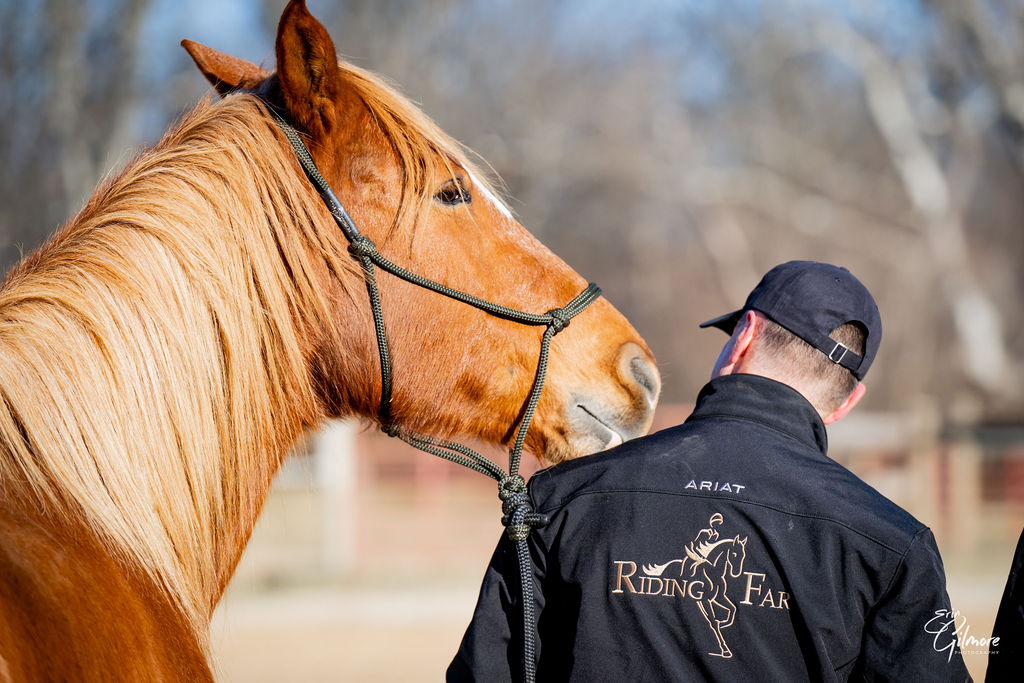
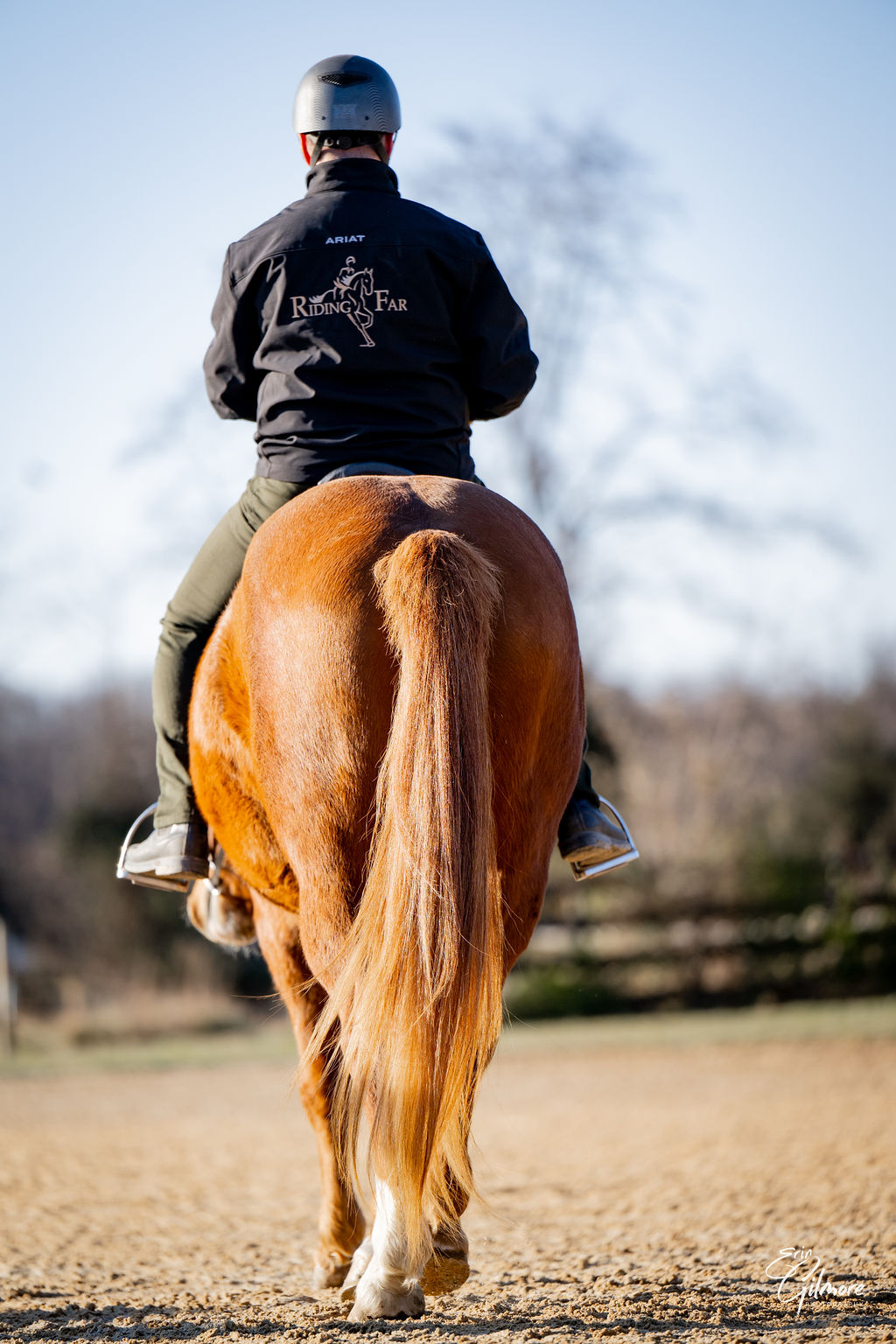
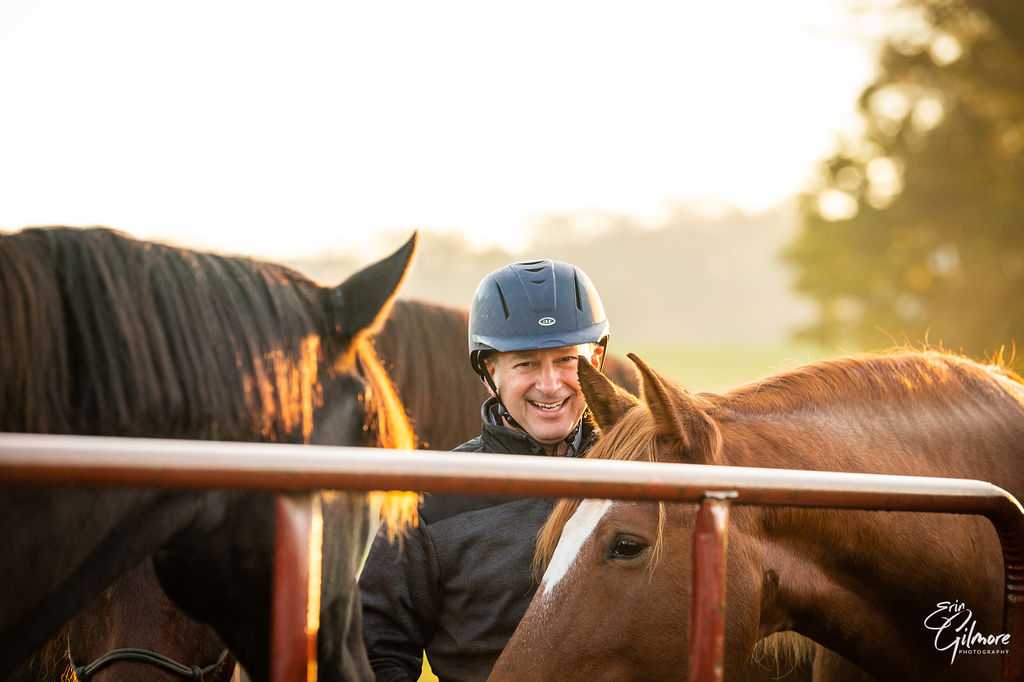
PC – Erin Gilmore Photography
September 19, 2026
Read more
August 16, 2026
Walk down a barn aisle and you start to craft a story filled with seemingly benign judgments. That one is misbehaving. He is kicking the door. That one is trouble. She is pawing in the crossties. That one is fine… he is standing still.
I told myself those stories a thousand times, casually and automatically, because it is the story almost all of us were taught. Trouble is what you can see. So, when you cannot see any, there is none.
Underneath that is a single assumption. We assume a troubled animal will show us, that distress announces itself, that if something were really wrong we would see it. And nowhere do we trust that assumption more than with fear. Fear spooks, it braces, it bolts. So when the spooking stops, we believe the fear stopped with it.
Here is the thing. The absence of visible fear does not tell you that a frightened animal is at peace. It may tell you only that the fear is no longer being expressed in the way you expect.
Take a frightened horse and make him stop reacting. He may become watchful. He may stand still while every part of him remains organized around what might happen next. He is not grazing. He is not dozing with a hind leg cocked and his lower lip loose. He is not nosing the strange bucket somebody left in the corner just to find out what it is.
He looks, if anything, tense. Nobody walks past that horse and calls him fine.
But there is another possibility, and this one can fool many people, including me. Instead of staying up, the nervous system can shut down. It can quit.
There is a kind of horse who stands very still for long stretches. Neck flat and level with his back. Eyes open, staring, not much blinking. Ears fixed and pointed back. He does not react much to a person appearing at his stall, or to a sudden noise, or to being touched. He looks, honestly, like a horse who has finally settled.
He has not settled. He has given up.
Researchers have studied horses who display this kind of withdrawn behavior, and they found something that should stop all of us cold. Those withdrawn horses had lower plasma cortisol levels than their non-withdrawn neighbors. Lower. So if you had walked up and administered a lab test, the number might have looked reassuring even though there was something seriously wrong.
The number does not tell you the whole story. Neither does the behavior by itself. Neither tells you what kind of life is happening inside the animal.
On the surface those two horses could not look less alike. One is tight. The other is still. Yet neither is grazing quietly. Neither plays. Neither goes looking for anybody. The same things are missing from both.
That is why quiet tells you so little. Quiet is not the same as safe. Quiet is just quiet.
I have watched this play out with clients more times than I can count. Someone finds a horse who is dead quiet. Bombproof. Stands like a rock at the mounting block, does not care about the tarp or the traffic or the dog. They try him, they love him, they buy him. And three or four weeks after he gets home, he starts to act up. Suddenly he has opinions. And the question the new owner always asks, and it is a fair question, is whether he was drugged the day they rode him. Sometimes he was. That happens, and I am not naive about it.
But I have come to wonder about a different explanation. What if he was not drugged and not calm either? What if he was shut down? And then he went home with a kind person who turned him out with friends, and fed him well, and did not ask much of him for a few weeks… and he woke up.
That is not a horse getting worse. That is a horse coming back to life.
It just came back in a way the new owner did not order. Because what returns first, when a shut-down animal starts to revive, is not the pleasant stuff. It is the opinions. The reactions. The ability to say no. A creature waking up is not necessarily a tidy process. Yet I would rather have a horse with opinions and a plan for helping him than a horse who has quit.
I want to be careful here, because a horse who suddenly has opinions can be genuinely dangerous, and this is the moment to get good help. But it changes what you think you are looking at. The behavior did not come out of nowhere. It came out of him.
So it helps to better understand the flavors of quiet. A horse can stop reacting because reacting never helped, or because he is still watching, or because he has stopped expecting anything to change. None of that is safety.
Safety is not what remains when fear disappears. It is not an empty space where the trouble used to be. Safety has something in it. A horse who feels safe has room for the rest of his life.
He grazes. He rests. He investigates. He plays. He notices another horse and goes over to say hello. He wanders away again. He has opinions. He can startle and recover. He can say no and then come back. His nervous system is not simply quiet. It is available.
We do the same thing with each other, of course. Somebody says they’re fine and we believe them, because nothing is visibly on fire. No crisis, no tears, no call at midnight. But not falling apart is a very low bar to clear, and I have known plenty of people, and have been one myself, who cleared it for years while nothing good was actually happening inside their lives.
The absence of a problem is not the presence of an engaged life.
These days I ask different questions with both horses and people. I used to wonder what was wrong. The true answers to that question are often easy to disguise. Now I ask what is alive.
Is he eating like he means it? Is he curious about something? Does he play? Does he seek anybody out, or does he only tolerate being sought? With people, same question in different clothes. Not, are you managing. But, what lights you up and is there anything you are looking forward to?
It is a harder question. It does not let anybody off the hook, including me. But it is the honest one, because it looks for something rather than settling for the absence of something.
Peace is not what is left when the trouble stops.
Peace is comes from connection and is something a body goes out and does.
Look for that.
A horse’s lesson in healthy boundaries, relational safety, and staying yourself in close relationships.
Sit on a horse and you learn something about balance you can never quite unlearn. Balance is not a thing you get… and then keep. It is not a position you find once and settle into. It is a thousand tiny corrections, most of them too small to see, made and unmade and made again, breath by breath, stride by stride. The moment you stop correcting, you start to fall. Good riders do not look busy. They look still. But that stillness is not the absence of effort. It is effort so constant and so refined that it disappears.
I have come to believe that boundaries work the same way.
We talk about boundaries as if they were walls. Build them once, build them high, and you are safe. Keep people out and nothing can hurt you. I understand the appeal. But it has never matched what I actually see, in my clients, in my horses, or in myself.
A wall keeps everything out. That is all it knows how to do. And a person who has built one has not solved the problem of closeness or safety with others in this world. They have only stopped facing it.
A boundary is a different thing altogether. A boundary is not where I keep you out. It is where I end and you begin. It is my sense of myself, held steady, while you are near. And like balance, it is not a position. It is a living act, corrected moment by moment, and hardest to hold with the ones standing closest.
Here is something I have noticed about myself, and maybe you will recognize it. I can keep a clean, easy boundary with a horse that is not mine. All day long. I can be kind and clear and unbothered, ask what needs asking, and never once lose track of where I stop and the horse starts. Put me on my own horse, with my own hopes riding along, and it gets harder. The closer a thing is to my heart, the harder it is to stay myself inside it. My marriage of thirty-eight years is where I have practiced this the most, and still get it wrong the most. My grown sons, the same. The people I love most are the people I am most tempted to disappear into, or to wall off from. Same fear, two costumes.
Because that is the thing about losing your balance. It goes two ways.
Lean too far away and you harden. You become the fortress. Defended, unreachable, safe and alone. That danger is easy to see. We all know the person who has walled themselves off.
Lean too far toward the other and you disappear. You become the doormat, yes, but there is a deeper and truer name for what is happening. It is fusion. You melt into the other person, you become whatever the moment seems to need, until there is no you left in the room. And fusion is the danger we almost never name, because it does not look like a danger at all. It looks like devotion. It looks like love.
But it is every bit as dangerous as the wall, and in some ways worse, precisely because it hides so well. When I dissolve into you, there is no longer a me here to meet you. And two nervous systems with no boundary between them do not calm each other. They catch each other. Your worry becomes mine, mine feeds yours, and around we go, with no steady ground under either of us. I cannot help you find your feet if I have given away my own. The calm you borrow from me only works if I am still standing somewhere you are not. Fusion gives that away. It trades the two of us for one blurred thing that cannot hold anyone.
So both roads fail, and they fail in the same place. The fortress keeps everyone at arm’s length and calls it strength. The fused pour themselves out and call it love. Neither one has done the harder thing, which is to stay a whole, distinct person while letting another all the way in. That is why the person with no boundaries cannot actually afford the closeness they are chasing. Push them away, or vanish into them. Either way, no one is truly met. No one feels safe.
A boundary is what refuses that trade. If I know where I end, I can let you all the way in without fear of losing myself, because I know I will still be here when you go. It is the person with a clear, kind boundary who can afford to be generous. To be soft. To be truly open. I used to assume the most boundaried people would be the coldest. I have found the reverse. The warmest, most compassionate people I know are almost always the most clearly bounded. The fence is what lets them keep the gate open.
A boundary is a balance. It is the quiet, endless, mostly invisible work of staying yourself while staying close. You will lose it and find it, lose it and find it, especially with the ones you love, for as long as you live. That is not failure. That is what balance is.
The goal was never to need less of anyone, nor become one with someone else. The goal is to become someone who is solid and secure enough to be in close relationship with others, both horse and human and in this way build true safety.
~ Paul
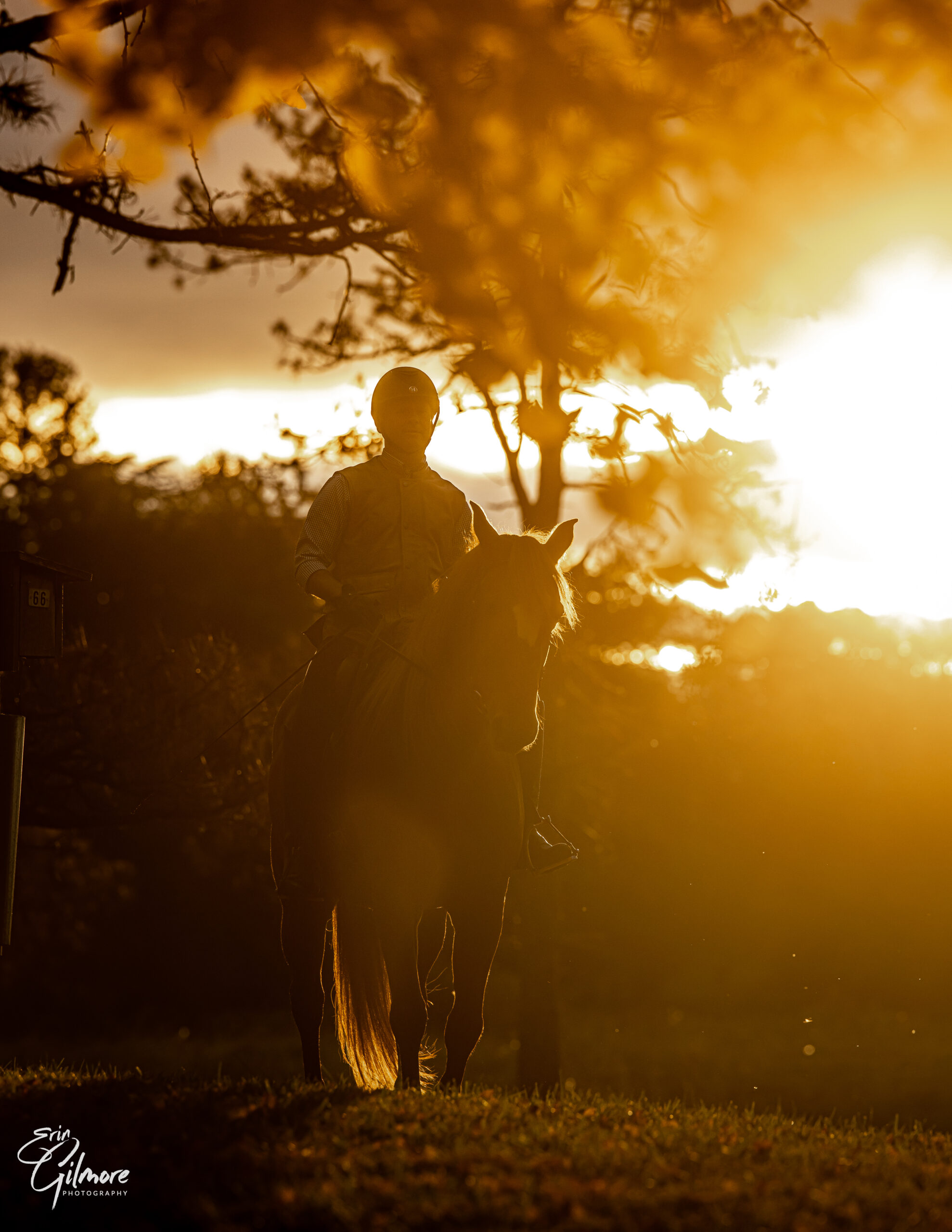
PC – Erin Gilmore Photography
Read More
A horse’s lesson in healthy boundaries, relational safety, and staying yourself in close relationships.
Sit on a horse and you learn something about balance you can never quite unlearn. Balance is not a thing you get… and then keep. It is not a position you find once and settle into. It is a thousand tiny corrections, most of them too small to see, made and unmade and made again, breath by breath, stride by stride. The moment you stop correcting, you start to fall. Good riders do not look busy. They look still. But that stillness is not the absence of effort. It is effort so constant and so refined that it disappears.
I have come to believe that boundaries work the same way.
We talk about boundaries as if they were walls. Build them once, build them high, and you are safe. Keep people out and nothing can hurt you. I understand the appeal. But it has never matched what I actually see, in my clients, in my horses, or in myself.
A wall keeps everything out. That is all it knows how to do. And a person who has built one has not solved the problem of closeness or safety with others in this world. They have only stopped facing it.
A boundary is a different thing altogether. A boundary is not where I keep you out. It is where I end and you begin. It is my sense of myself, held steady, while you are near. And like balance, it is not a position. It is a living act, corrected moment by moment, and hardest to hold with the ones standing closest.
Here is something I have noticed about myself, and maybe you will recognize it. I can keep a clean, easy boundary with a horse that is not mine. All day long. I can be kind and clear and unbothered, ask what needs asking, and never once lose track of where I stop and the horse starts. Put me on my own horse, with my own hopes riding along, and it gets harder. The closer a thing is to my heart, the harder it is to stay myself inside it. My marriage of thirty-eight years is where I have practiced this the most, and still get it wrong the most. My grown sons, the same. The people I love most are the people I am most tempted to disappear into, or to wall off from. Same fear, two costumes.
Because that is the thing about losing your balance. It goes two ways.
Lean too far away and you harden. You become the fortress. Defended, unreachable, safe and alone. That danger is easy to see. We all know the person who has walled themselves off.
Lean too far toward the other and you disappear. You become the doormat, yes, but there is a deeper and truer name for what is happening. It is fusion. You melt into the other person, you become whatever the moment seems to need, until there is no you left in the room. And fusion is the danger we almost never name, because it does not look like a danger at all. It looks like devotion. It looks like love.
But it is every bit as dangerous as the wall, and in some ways worse, precisely because it hides so well. When I dissolve into you, there is no longer a me here to meet you. And two nervous systems with no boundary between them do not calm each other. They catch each other. Your worry becomes mine, mine feeds yours, and around we go, with no steady ground under either of us. I cannot help you find your feet if I have given away my own. The calm you borrow from me only works if I am still standing somewhere you are not. Fusion gives that away. It trades the two of us for one blurred thing that cannot hold anyone.
So both roads fail, and they fail in the same place. The fortress keeps everyone at arm’s length and calls it strength. The fused pour themselves out and call it love. Neither one has done the harder thing, which is to stay a whole, distinct person while letting another all the way in. That is why the person with no boundaries cannot actually afford the closeness they are chasing. Push them away, or vanish into them. Either way, no one is truly met. No one feels safe.
A boundary is what refuses that trade. If I know where I end, I can let you all the way in without fear of losing myself, because I know I will still be here when you go. It is the person with a clear, kind boundary who can afford to be generous. To be soft. To be truly open. I used to assume the most boundaried people would be the coldest. I have found the reverse. The warmest, most compassionate people I know are almost always the most clearly bounded. The fence is what lets them keep the gate open.
A boundary is a balance. It is the quiet, endless, mostly invisible work of staying yourself while staying close. You will lose it and find it, lose it and find it, especially with the ones you love, for as long as you live. That is not failure. That is what balance is.
The goal was never to need less of anyone, nor become one with someone else. The goal is to become someone who is solid and secure enough to be in close relationship with others, both horse and human and in this way build true safety.
~ Paul
PC – Erin Gilmore Photography
August 1, 2026
Read more
July 18, 2026
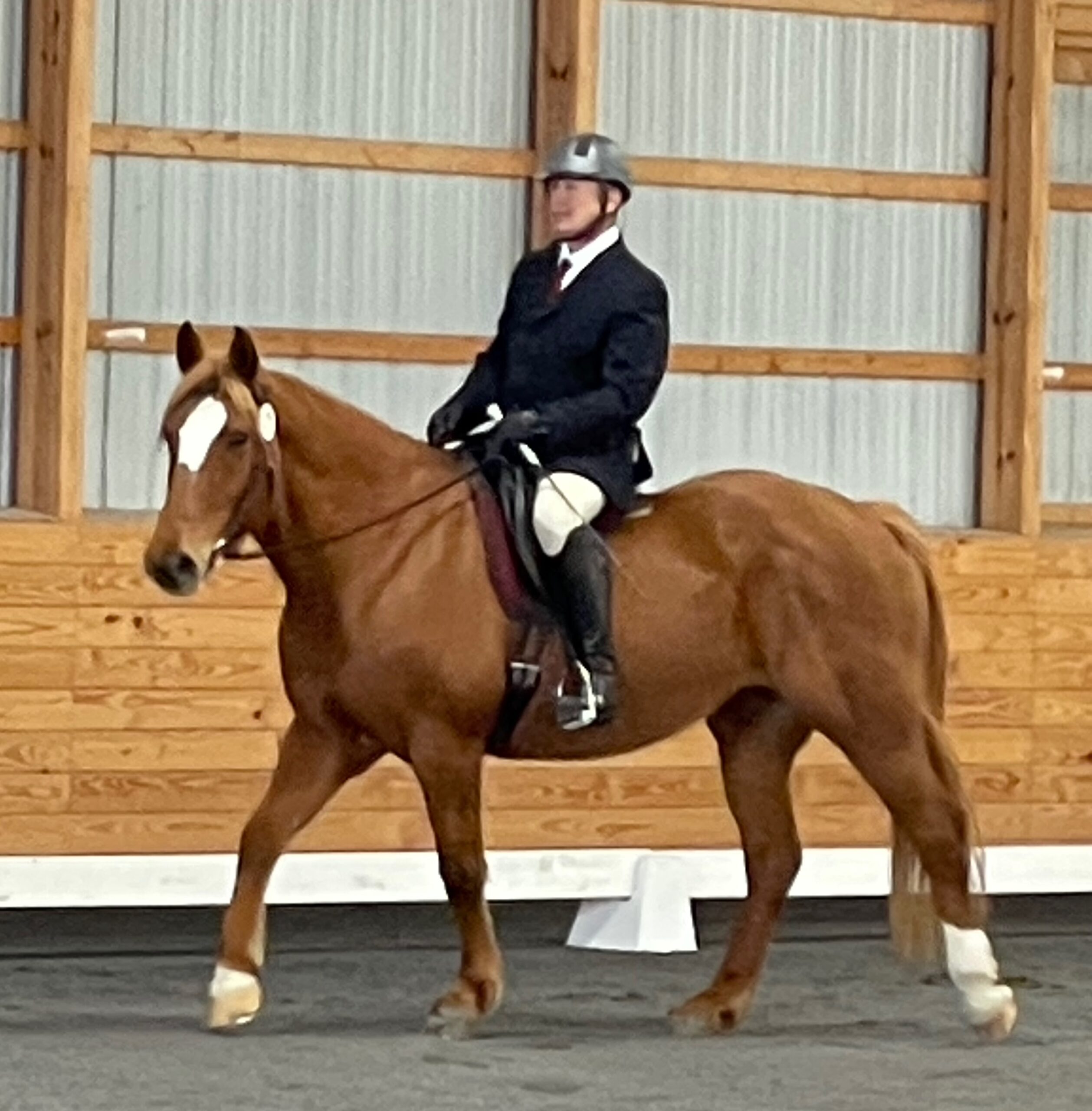
Several of my riding friends have asked about my mare Nubble and how she is doing after her recent lameness. The answer is not a simple one, but her diagnosis has presented an opportunity for some soul-searching about ambition, competition, and what partnership with horses really asks of us.
After a thoughtful examination, our veterinarian discovered navicular changes in her left front foot, as well as advancing arthritis in both front pasterns. In my conversation with the vet about the results of the evaluation, I came away with both an understanding and a question.
We could make her sound. With the right shoeing, injections, medication, and ongoing management, Nubble could likely return to work comfortably. But comfortable is not the same as healed. The degeneration underneath would still be there, and pushing her fitness and collection further would likely accelerate it rather than reverse it. We could manage the symptoms. We could not undo the underlying changes.
And so, the question that has stayed with me since that conversation is not really about her soundness at all.
Why? To what end?
When Competition Changes the Story
That question has really challenged me. Most of you know that I returned to competition in recent years. This year, Nubble and I qualified for the USA Working Equitation Region 6 Championship. That pursuit had led me to ask more of her. Not any sort of intense or draconian more. Just more. More fitness. More practice. A higher level of responsiveness and collection.
There is nothing inherently wrong with asking a horse to become fitter, stronger, more balanced, or more responsive. Thoughtful training can contribute to a horse’s well-being and help both horse and rider grow. Competition can also be joyful. It can give our training direction, invite us to test our communication, and create opportunities to learn alongside others.
But the meaning of competition depends partly on the story we bring to it.
What I realized was that my motivations had shifted. The story I was living had changed slowly and almost imperceptibly. It had become more heavily layered with my own ambition. Somehow, it had become increasingly important to prove something to myself and perhaps to the world by winning. Competition had shifted from playful exploration toward a personal agenda.
Examining Ambition Without Assigning Blame
I want to be clear. I have no idea whether Nubble’s soundness issues are related in any way to this shift in our story. Each of her challenges is progressive by nature. This could all be part of a natural degenerative process and have very little to do with my ambition.
This is not an attempt to create a simple causal explanation or assign blame. Horses experience arthritis, navicular changes, and other degenerative conditions for many reasons. Even with excellent care, thoughtful training, and attentive management, their bodies change over time.
But uncertainty about the cause does not relieve me of the responsibility to examine what is guiding my choices now.
The question is no longer simply whether we can make Nubble comfortable enough to work. The deeper questions are:
- What would I be asking her to do?
- Why would I be asking her to do it?
- Who would benefit from that decision?
- What risks would she carry so that I could pursue my goals?
- What does genuine partnership with horses require of me now?
These are uncomfortable questions, but discomfort is not necessarily a sign that we should turn away. Sometimes it is an invitation to look more honestly at the story we have been living.
The Stories That Shape Our Decisions
The stories we live inside shape what we notice, what we pursue, and what we ask of ourselves and others. Most of the time, they do this quietly.
When our story is about curiosity and partnership, we make one set of choices. When it becomes a story about winning, proving ourselves, or securing our worth, we may begin making different choices without consciously recognizing the change.
Play can become performance. Exploration can become conquest. A shared experience can become a personal test.
Ambition itself is not necessarily the problem. Ambition can inspire learning, discipline, creativity, and growth. The challenge is remaining aware of when our ambition begins to eclipse the needs of the horse who makes that pursuit possible.
That awareness matters because the story I am enacting will guide the decisions I make from here. Recognizing my shifting motivations can help me choose what comes next. It can also help ground me again in my core values.
Returning to Partnership and Mutual Belonging
Nubble does not exist to gratify my desire to conquer others in competition or to prove myself. She is not a vehicle for my ambition or a measure of my worth.
Rather, we both belong to this shared world of horses and humans. We belong to each other.
That belonging creates responsibility. It asks me to consider not only what is technically possible, but also what is kind, fair, and worthy of the relationship we have built. It asks me to listen when circumstances change and to let the shape of our partnership change with them.
Within that partnership, I will care for her. I will work with our veterinarian and farrier to keep her comfortable. I will remain curious about what she enjoys and what her body can comfortably offer. Most importantly, I will not allow an old competitive story to determine what our future must look like.
Together, we will return to playing, exploring, and discovering what remains possible through partnership and mutual belonging.
Perhaps that is the deeper work for all of us: not simply deciding what we can ask of our horses, but remaining honest about why we are asking.
~ Paul
Read More
We are teaching this weekend, so my reflections will need to be short by necessity.
I have been reading *Ishmael* this week. It is an unusual novel built around the relationship between a teacher and a student who are trying to understand the destructive nature of humanity and what it might take to save the world. If you are looking for a book that genuinely encourages you to think, this is one worth reading.
Someday I hope to write more about its deeper message and what it may mean for our relationship with horses. Today, though, I wanted to share one idea that appears early in the book because it has stayed with me all week.
The author suggests that every one of us is living a story. If we want to change our lives, we must first recognize the story we are living, because only then can we begin to write, tell, and ultimately live a different one.
The fascinating part is that when you are inside your own story, it does not feel like a story at all.
It simply feels like reality.
It feels like the way things are.
The Stories We Tell Ourselves
That idea has challenged me to step back and examine the stories I am living.
I have found myself reflecting on the stories that shape my relationship with my horse, with horses in general, with the people I love, and even with people as a whole.
Some of these stories are obvious. Others have become so familiar that I have stopped noticing them altogether. They have quietly become assumptions rather than choices.
Those stories are incredibly powerful. Not because anyone else would necessarily be impressed by them, but because they quietly determine what I notice, what I ignore, what I believe is possible, how I respond, and where I become stuck. They empower some parts of my life while limiting others, often without my ever realizing it.
As a psychologist, I have spent much of my career helping people recognize these stories. As a horseman, I have become increasingly convinced that the same process unfolds in the barn every day.
Every Horse and Rider Brings a Story
Every horse arrives carrying a history. Every rider does too. Sometimes the stories are hopeful. Sometimes they are fearful. Sometimes they are stories of failure, confidence, frustration, success, or disappointment.
Whether we recognize them or not, those stories influence every interaction. They shape what we expect from our horses, what we notice in their behavior, and how we interpret their responses. They influence the questions we ask and the answers we think are possible.
Often, before we teach a new skill, we have to become aware of the story that has been guiding us all along.
Rewriting the Story
As I head into today’s teaching, I find myself looking forward to exploring the stories our clients are living with their horses.
So often, meaningful change does not begin with a new technique.
It begins with a new story.
When someone begins to see their horse differently, they often begin to ride differently. When they begin to see themselves differently, entirely new possibilities emerge. The techniques matter, but the story determines how those techniques are understood and applied.
Perhaps that is a worthwhile question for all of us this weekend.
What story am I living?
And perhaps an even better question:
Is it still serving me?
~ Paul
July 11, 2026
Read more
July 4, 2026
I have so many things on my mind this morning.
I sat down to write with a clear idea of where I wanted to go, but by the time I finished the first sentence another idea had arrived, and the first one lost its luster. Then came a third. A fourth. A fifth.
So instead of a carefully formulated essay, you may simply end up walking with me through the swirling mass of ideas that fills my head.
When Too Many Ideas Compete for Attention
Most of what I am reflecting on is the direct result of our recent clinic with Pippa Callanan. I carried so many emotions into that weekend. A deep sadness that I would not be dancing with my beloved Nubble (more to come about her in the weeks ahead). Worry about Revel, who was recovering from both lameness and a gastrointestinal infection. Guarded optimism and curiosity about what a full clinic experience with my sweet, goofy partner in crime, Lil’ Joe, might be like. Joy at spending time with my friend and mentor Pippa. And delight in sharing a community of horsewomen and horsemen committed to searching for and practicing what Pippa so beautifully describes as “gentle and effective, and in alignment with the nature of the horse.”
As I type these words, I feel every one of those emotions again.
As the swirl begins to settle, there are a few things that I feel compelled to share. Nothing earth shattering or blindingly illuminating. Just a handful of ideas that have become deeply important to me.
Celebrating Someone Else’s Success
The first is the pride and joy I feel watching the accomplishments of everyone who participated in the clinic. They truly did their homework. Especially, as you might expect, Justin and all of the ponies that have challenged him to become a better horseman stand out in my mind. Watching their partnerships blossom has been one of the great privileges of my life.
I found myself searching for words to describe the feeling. It is a genuine, selfless pride in someone else’s accomplishments. It turns out there are words for it, just not in English.
In Hebrew there is firgun. In Sanskrit there is mudita. Both describe the sincere, generous, non-jealous joy we experience when someone else succeeds.
That is exactly how I feel about Justin and about everyone in our Riding Far community who continues to challenge themselves to grow in their relationship with their horses.
Eighteen Months in Preparation
The next thoughts arise from my own experience with Lil’ Joe.
He was a rock star throughout the clinic. We took so many meaningful steps forward in developing his balance and strengthening our partnership. Movements and moments that once seemed out of reach emerged naturally, if not always easily.
Throughout those moments, I kept hearing Pippa’s voice.
“Eighteen months in preparation.”
And indeed it was.
I realized that all of the small, slow, consistent work we had done together over the past year and a half had quietly accumulated into something remarkable. I simply hadn’t noticed it happening.
It reminded me of something I tell my clients all the time: we are often terrible assessors of our own progress. We live inside our own experience, making it difficult to notice gradual change. Trusted friends, colleagues, teachers, and mentors often see our growth more clearly because they have the benefit of perspective.
The Difference Between Asking and Inviting
Finally, one last thought for today.
There is a familiar saying in many psychological circles about parenting: “Ask, tell, help.” I have always appreciated it as a respectful progression. But Pippa and Lil’ Joe taught me there may be another step that comes before all of them.
Invitation.
If I am honest, I tend to be someone who wants to make things happen. I cannot count the number of things I have broken over the years simply because I tried to force them when they refused to work the way I wanted.
One of the greatest lessons I have learned from Pippa has been the importance of the release of the aids, especially the hands. Her words echo constantly in my mind:
“The purpose of the aids is to request or restore, never maintain.”
What I had not fully appreciated was how every application of every aid changes if I think of it first as an invitation.
An invitation is different.
It carries no demand.
It leaves room for choice.
And it is completed with a release.
That simple shift became a game changer for Joe and me. After each quiet invitation and each release, Joe did not take advantage of the freedom or insist on his own agenda. Instead, time after time, he offered more of the answer I had been hoping to find together.
What Invitation Might Mean for the Horse World
That experience has me thinking far beyond riding.
There are so many transformative ideas emerging in the horse world about how we care for, train, ride, and compete with our horses. Yet if you spend even a few minutes scrolling through social media, what you mostly encounter is conflict. Ironically, that conflict often comes from people who are passionately advocating for more relational, connected, compassionate ways of working with horses.
It makes me wonder what might happen if we learned to invite and release instead of trying to convince, correct, persuade, or make things happen.
Perhaps invitations create more space for curiosity than arguments ever can. Perhaps invitations are more likely to change hearts than demands. I know this is an idea we will continue exploring at Riding Far.
So consider this exactly that…
An invitation.
~ Paul
Read More
There is a question I have been sitting with lately, one that does not have a clean answer but that I think is worth asking anyway.
Everything we do with our horses, the riding, the training, the competing, the hours of groundwork and liberty and quiet time in the field, is driven by us. Our interests. Our desires. Our needs. The horse did not sign up for any of it. We brought them into our world, gave them a job, and asked them to meet us where we are.
Most of the time this sits quietly in the background. We love our horses. We care for them deeply. We believe, often correctly, that what we offer them is a good life. And so the question stays quiet.
Then something happens. A horse breaks down. A soundness issue emerges. An injury that did not have to happen, that might not have happened, if we had not been pushing toward a goal, a clinic, a show, a particular moment of progress that mattered to us.
I have watched this land in clients with real force. I have felt this land deep within me. The guilt is not small. Neither is it entirely misplaced. There is something genuinely worth examining in the recognition that our horses carry the consequences of our ambitions.
I do not think the answer is to stop riding. I do not think it is to abandon our goals or pretend the desire is not there. The desire is real and it is part of what makes us horsemen and horsewomen rather than simply horse owners. But I do think the question is worth holding. Whose ride is this? What am I asking? Is what I am asking reasonable given where my horse actually is today, not where I want them to be, not where we were last week, but today?
The ethical life with horses is not a problem to be solved. It is a conversation to be continued. One that asks us to hold our own needs alongside a clear-eyed accounting of what we are asking of another living being who cannot advocate for themselves in the ways we can.
They give us so much. The least we can offer in return is the honesty of the question.
~ Paul
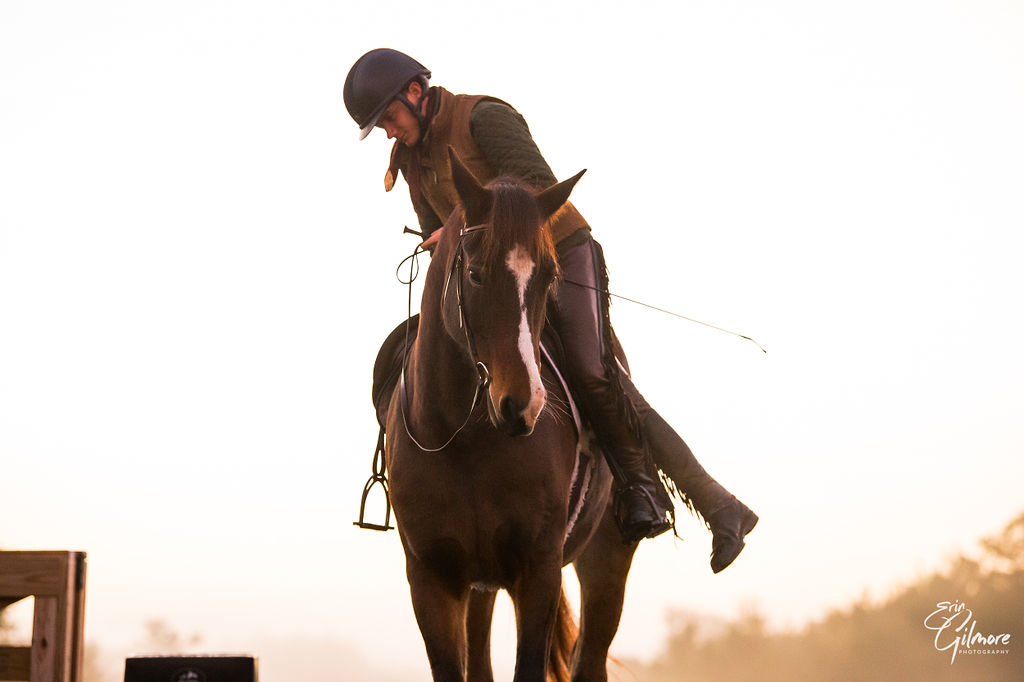
PC – Erin Gilmore Photography
June 20, 2026


