

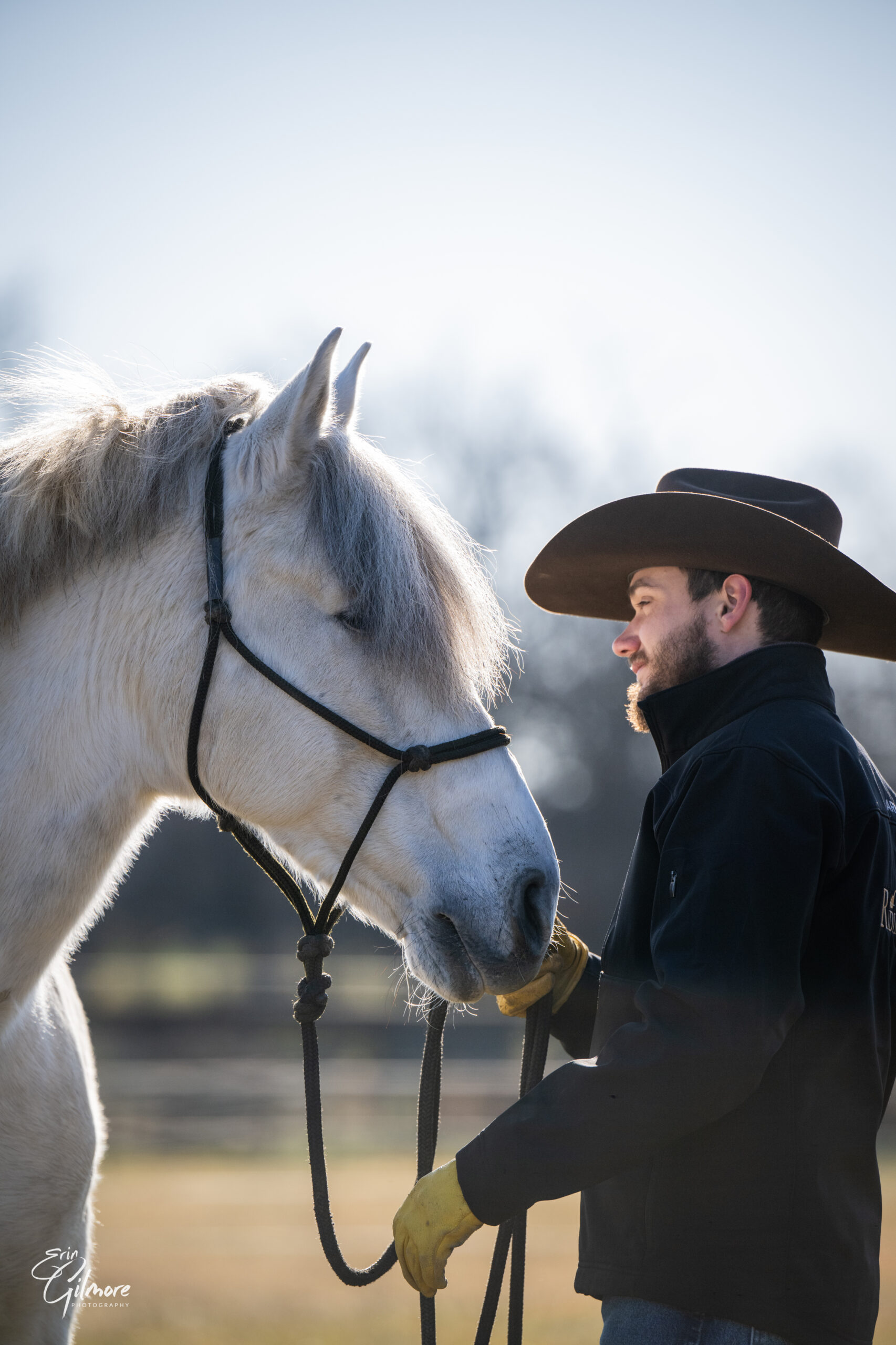
This week I had the pleasure of introducing a friend to horses for the first time. We walked stall to stall alongside the barn, and I watched them stop a few feet from Lip, unsure whether to step closer or back away. Lip lifted his head, ears forward, nostrils working. For a long moment neither of them moved.
I have seen thousands of first meetings between horses and people. Somehow this one caught me. It got me thinking about first greetings, and about everything we carry with us into them.
We bring emotions. Excitement, anticipation, and longing, often tangled up with anxiety, fear, or trepidation. My friend had wanted to meet a horse for years, and was also a little afraid of the size of the animal standing in front of them. Both were true at once. They usually are.
We bring assumptions. Whatever we have come to believe about horses from school, from books and movies, from the stories people tell us. Horses are gentle. Horses are dangerous. Horses can smell fear. Horses love carrots. Some of it is true, some of it is half true, and some of it is simply what we were told.
We bring our habits of connecting. Every one of us has a lifetime of patterns for greeting another being. We shake hands. We hug. We pat someone on the back. We look people in the eye, smile, and speak. We offer food. These patterns are so automatic that we hardly notice them, and many of them don’t translate. A pat that feels friendly to us can land as a smack to a horse. A direct stare and a confident stride toward the face can look a lot like a predator. Most dogs will happily take an excited voice, a quick crouch, and a good rub all over. Most horses would rather we slow down, let them reach out and breathe us in, and wait to be invited closer.
And here is the humbling part. With everything we bring, what do we actually know about this particular horse, standing in front of us at this particular moment?
Nothing.
We don’t know his history. We don’t know how his body feels today, what he has learned to expect from people, or what he is hoping for or worried about. Every bit of that has to be discovered.
The Zen teacher Shunryu Suzuki said, “In the beginner’s mind there are many possibilities, but in the expert’s mind there are few.”
I love that line, and I also want to be careful with it. Beginner’s mind is not the same as an empty mind. We can’t simply throw away everything we know, and we shouldn’t. What we have learned about connecting with others has served us well. It is a template, and templates are useful.
The challenge is to hold that template loosely. To let go of our expectations enough to take in the reality of the one in front of us, without dismissing everything that has worked for us in the world.
This reminds me of something we know about how the brain makes sense of the world. Psychologists talk about two kinds of processing. Bottom-up processing starts with raw sensory information: the light, the sound, the touch, the smell, all coming in fresh. Top-down processing starts with what we already know. It uses expectations, memory, and experience to interpret that information quickly.
We need both. Top-down processing is what lets an experienced horseman read a horse’s whole posture in a glance and know that something is off. It is fast, efficient, and often wise. Bottom-up processing is what lets us notice the thing we didn’t expect. The small shift of weight, the softening eye, the subtle tightening of the lip that doesn’t fit our story about this horse.
Too much in either direction and we run into trouble. With too much top-down, we see what we expect to see. We greet the horse we imagined instead of the horse in front of us, and we miss what he is telling us. With too much bottom-up, we are flooded. Every sound and movement feels new and possibly dangerous, and we have nothing to anchor us. This is often where fear lives for new riders. Everything is information and nothing makes sense yet.
Good horsemanship lives in the balance. We lean on what we know so we aren’t overwhelmed, and we stay open to the information so we aren’t blinded by what we know.
Back at Lip’s stall, my friend was finding that balance in their own way. They were taking in the size of him, the warmth of his breath, the way his ears followed every move. I suggested they let him come the last little bit, and they offered the back of their hand and simply waited. Lip stretched out his neck, sniffed, blew softly, and dropped his head. My friend chuckled, the kind of delighted and satisfying chuckle that comes when something turns out better than we imagined.
It was a lovely greeting. And it reminded me that the best greetings, with horses and with people, are not performances of what we already know. They are moments of curiosity. A question offered and an answer received.
Every horse we meet, even the ones we have known for years, is a little bit new each day. So are the people we love.
Bring everything you know to the greeting, and then let the one in front of you teach you the rest.
~ Paul
PC – Erin Gilmore Photography


LEAVE A COMMENT
Comments