

Earlier this week I wrote about the stories we tell ourselves. “I don’t do well under pressure.” “I’m not a very confident rider.” “I’m just not that kind of person.” Those stories can quietly shape what we attempt, what we avoid, and who we allow ourselves to become.
Then Thanksgiving arrived. Our whole family gathered for breakfast this year, around a table filled with lox and homemade sourdough bagels, scrambled eggs, bacon, and sweet potato hash browns. My soon-to-be daughter-in-law brought a lovely tradition to the table. Each of us rolled two dice and then named that many things we were grateful for. Roll a three, name three. Roll a ten, name ten. She wrote every answer down to keep in a family gratitude journal.
Somewhere between the bagels and the second cup of coffee, those two ideas, the stories we carry and the gratitude we name, found each other.
We spend a lot of time thinking about what we don’t have. Sometimes it is something tangible, something we wish we had accomplished, or some place we imagine we should be by now. Other times it is less concrete. The feeling that we aren’t quite good enough. That we don’t quite belong. That everyone else has something figured out that we somehow missed.
These thoughts can be remarkably persistent. And while they feel like observations about the world around us, they often tell us more about the stories we carry about ourselves.
What strikes me is how easily those stories begin to shape our experience. When we are preoccupied with what we lack, we become very good at finding it. Psychologists have names for this. Our brains give extra weight to what might be wrong, and we tend to notice the evidence that confirms what we already believe. Put those two tendencies together with an old, familiar story about not being enough, and the story starts to feel like simple fact.
So we can be surrounded by kindness and affection and still find ourselves wondering whether we are truly wanted. We can accomplish something meaningful and spend our time thinking about how much further we have to go. We can sit at a full table and feel strangely empty.
In the process, we miss something important. We miss the experience of what is actually here.
Insecurity narrows the lens. It is a kind of tunnel vision, and like all tunnel vision, it is very convincing from the inside. Everything we see seems to prove the point, because we have stopped seeing everything else.
This is where I think gratitude has something to teach us.
The psychologist Barbara Fredrickson has spent much of her career studying what she calls the broaden-and-build effect. Her research suggests that while fear and threat narrow our attention, positive emotions like gratitude, interest, and joy tend to widen it. We take in more of the scene. We notice more possibilities. Over time, those wider moments help build the relationships and resources that carry us through harder days.
I find that both hopeful and practical. Gratitude isn’t about pretending everything is wonderful. It isn’t a correction for feeling insecure, or a way of telling ourselves we shouldn’t feel what we feel. The doubts may still be there. The things we would like to change may still need changing.
What gratitude offers is a wider view. The chance to see what is present alongside what is missing. The people who show up. The opportunities in front of us. The relationships that have quietly held us. The small, ordinary moments that make up the richness of a life.
Here is the funny thing about the dice. I expected the big numbers to be the hard ones. Ten things to be grateful for, on the spot? But it turned out the other way around. The low rolls were harder. With a ten, you could let it all pour out. With a two or a three, you had to choose, and choosing meant leaving so much out. Once we let ourselves look, the problem was never finding enough. The problem was that there was too much.
That is exactly what a wider lens does. When we are caught in the story of what is missing, it can be hard to name even one thing. When the lens opens, we discover that we were standing in abundance the whole time.
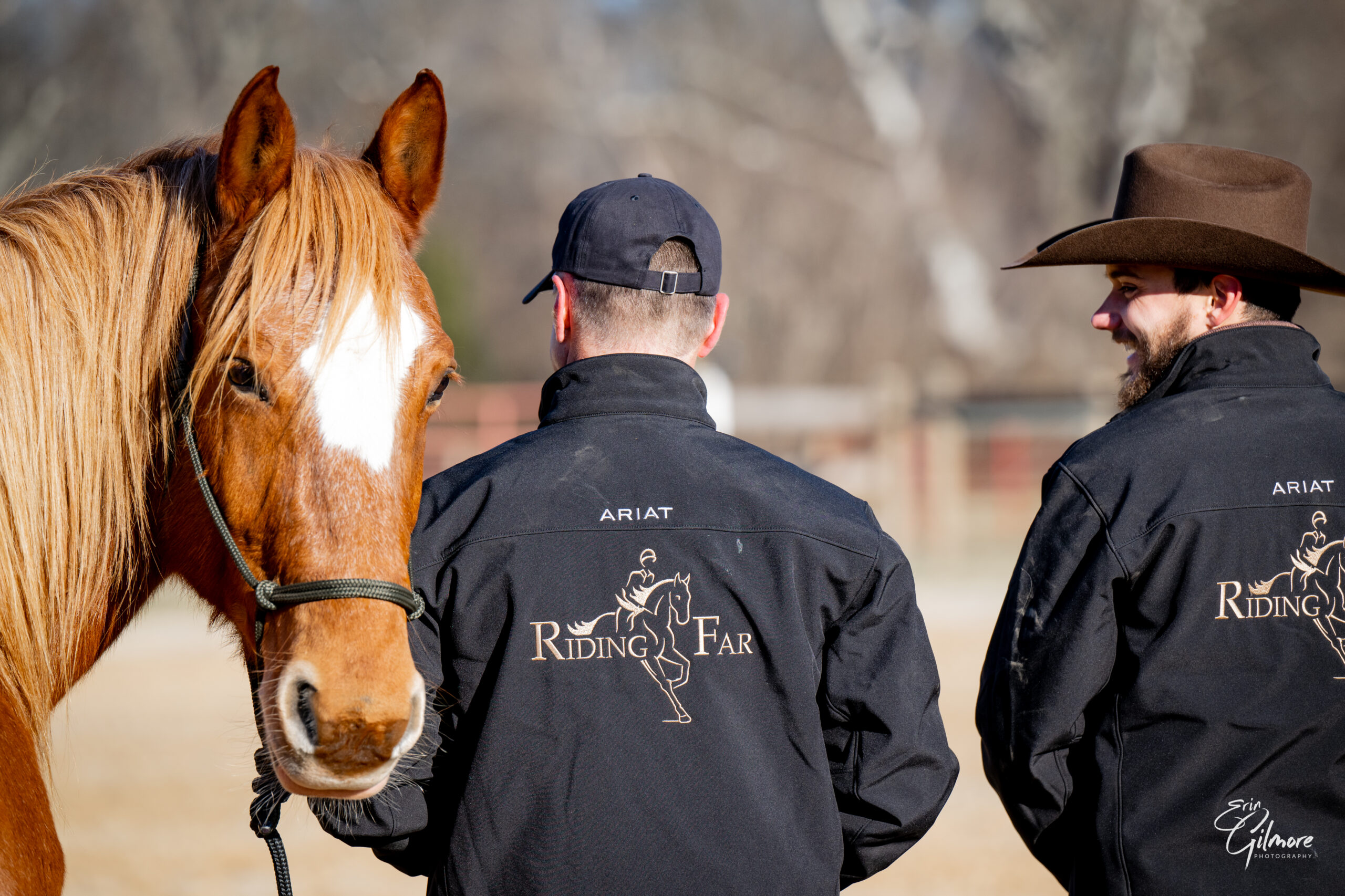
I see a version of this with horses all the time. When a horse is worried, his world narrows to the one thing that might be dangerous. He can’t take in the quiet pasture, the familiar barn, or the person standing calmly beside him. As he settles, his head comes down, his eye softens, and the rest of the world comes back into view. Nothing in the pasture changed. What he could see did.
We aren’t so different.
Sometimes the greatest obstacle to gratitude isn’t a lack of things to be grateful for. It is the narrowness of the lens through which we’re looking.
So as this holiday weekend winds down, I want to offer a small invitation. The next time you catch yourself taking inventory of what is missing, pause and widen the frame just a little. Not to argue with the story, and not to force yourself to feel thankful. Just to look around and notice what else is there. Maybe even roll a couple of dice.
You may find that the table was fuller than you thought. And if you write it down, as our family now does, you will have a record to return to on the days when the lens starts to narrow again.
Gratitude doesn’t erase what is missing. It simply lets us see everything that was here all along.
~ Paul
PC – Erin Gilmore Photography


LEAVE A COMMENT
Comments